Advocacy Services
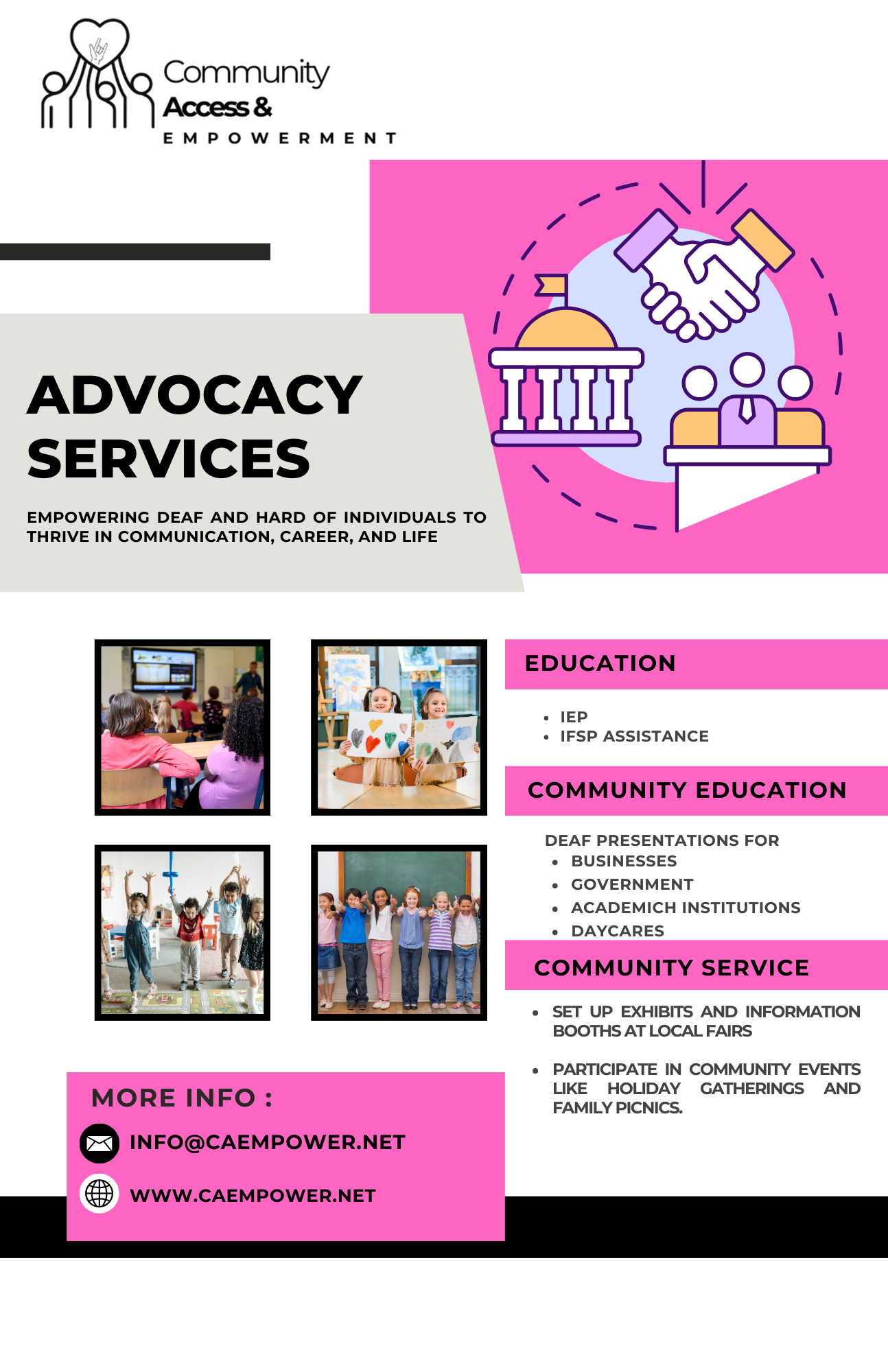
CAE provides advocacy services for deaf and hard of hearing individuals. Our mission is to empower and support our clients to achieve their goals and full potential. With a team of trained professionals, CAE strives to improve access and break down barriers in schools, the workplace, and the greater community.
Advocacy Services Program
Program Goal
To empower individuals who are facing systemic or personal barriers by providing comprehensive advocacy support, ensuring their rights are protected, and facilitating access to necessary resources and services.
Core Services
The Advocacy Services Program offers direct support through a multi-faceted approach, focusing on individual needs and systemic issues.
Individual Advocacy
Case Management and Navigation:
One-on-one assistance to help clients understand their rights, available resources, and complex application processes (e.g., housing, disability benefits, legal aid).
Developing personalized action plans to address immediate and long-term needs.
Mediated and Negotiated Support:
Acting as a liaison between clients and institutions (landlords, government agencies, healthcare providers) to resolve disputes and secure entitlements.
Providing support during meetings, hearings, or interviews to ensure the client’s voice is heard and respected.
Crisis Intervention and Referral:
Immediate assistance for clients facing urgent situations (e.g., threat of eviction, utility shut-off, abuse).
Connecting clients with specialized legal, mental health, and emergency support services within the community network.
Systemic Advocacy
Policy Monitoring and Engagement:
Tracking local, state, and federal policies that impact the target population (e.g., changes in social security, housing regulations, healthcare access).
Mobilizing community input and providing expert testimony to inform policy makers and influence beneficial legislative changes.
Community Education and Outreach:
Conducting workshops and informational sessions on client rights, available benefits, and self-advocacy techniques.
Developing accessible educational materials (brochures, online guides) to demystify complex bureaucratic systems.
Target Audience
Individuals and families experiencing vulnerability due to:
Socio-economic instability (poverty, homelessness)
Disability (physical, developmental, mental health)
Immigration status
Age (seniors, youth transitioning out of foster care)
Involvement with the justice system
Direct Client Support
Number of new client intakes and active case management files.
Total clients served, average case resolution time.
Rights Protection
Advocacy interventions (e.g., contacting an agency, attending a hearing) on behalf of a client.
Percentage of successful advocacy outcomes (e.g., benefits secured, eviction prevented).
Systemic Impact
Participation in policy discussions, public forums, or legislative hearings.
Number of policy recommendations submitted, attendance at community education events.
Resource Connection
Referrals made to external specialized services (legal aid, job training, medical).
Referral success rate (percentage of clients who accessed the referred service).
Program Structure and Staffing
The program is overseen by a Program Manager and relies on a team of trained Advocates, who specialize in areas such as housing, benefits, or disability rights. A strong volunteer base assists with administrative tasks and community outreach.
Collaboration
The success of the Advocacy Services Program is dependent on strong partnerships with:
Local legal aid organizations
Shelters and housing services
Government social services agencies
Community health clinics
Employment and training programs